3 hr
Pottuvil Lagoon Mangrove Boat Safari
- Entry ticket
- Mobile voucher
- Valid same day
- Free cancellation
Pottuvil Lagoon Boat Safari — Mangrove Wildlife Excursions
Paddle through tangled roots at first light, crocodiles basking on mud banks below
Compare fares, pick the fit — all bookings are mobile-voucher and eligible for free cancellation where shown.
3 hr
3 hr
2 hr
| Experience | Duration | Rating | Pickup | Guide | Small group | Free cancel. | Price | |
|---|---|---|---|---|---|---|---|---|
|
Standard Entry
Most popular
Pottuvil Lagoon Mangrove Boat Safari
|
3 hr | ★ 5.0 | ✓ | ✓ | ✓ | ✓ | €27 | Book → |
|
Standard Entry
Pottuvil Lagoon Mangrove Safari
|
3 hr | ★ 4.8 | ✓ | ✓ | ✓ | ✓ | €26 | Book → |
|
Standard Entry
Pottuvil Lagoon Safari Through the Mangroves
|
2 hr | ★ 5.0 | ✓ | ✓ | ✓ | ✓ | €22 | Book → |
Worth it for birders and nature enthusiasts
A pottuvil lagoon boat safari delivers exceptional value for wildlife observers willing to start early. Operators guide small boats through brackish mangrove channels where painted storks, spoonbills, and crocodiles congregate at dawn. The lagoon ecosystem supports over 150 bird species, and sightings of monitor lizards, fishing eagles, and water buffalo are routine during the two-hour excursion. Tours cost between 3,000–6,000 LKR depending on group size and operator, with no separate entrance fee to the lagoon itself. The experience pays off most for patient photographers and birders who arrive during the 06:00–08:00 window when feeding activity peaks. Casual visitors hoping for dramatic wildlife encounters may find the slow-paced drift through mangrove tunnels less rewarding than a Kumana safari, but naturalists consistently rank the biodiversity density here among the highest on the east coast.
Bottom line: Book a reputable pottuvil lagoon boat safari tour for the morning slot and the birding alone justifies the cost.
They complement each other; most visitors who do both call the pottuvil lagoon boat safari the more immersive wildlife experience, while the coastal tours prioritize proximity to the surf scene.
|
Top pick Pottuvil Lagoon |
Arugam Bay Lagoon | |
|---|---|---|
| Primary focus | Mangrove ecology and wildlife | Coastal scenery and proximity |
| Wildlife density | High concentration of elephants and birds | Moderate avian population |
| Required physical activity | Low—seated boat observation | Low—seated boat observation |
| Typical duration | 1.5–2 hours | 1–1.5 hours |
| Atmosphere | Tranquil and remote | Accessible and social |
| See tickets & prices |
Verdict: Choose the pottuvil lagoon boat safari tour for deeper ecological exploration, or consider pottuvil lagoon boat safari tickets for a more convenient alternative if you prefer staying near the busy beach hub.
Hand-picked experiences loved by thousands of travelers
1.5 hours
Free Cancellation
Glide through mangrove-lined waters at dawn or dusk to spot herons, crocodiles, and elephants near Arugam Bay
6 hours
Free Cancellation
Half-day wildlife expedition through Sri Lanka's premier birdwatching sanctuary and leopard habitat
3 to 6 hours
Free Cancellation
Discover wild elephants and diverse birdlife across wetlands and grasslands on this intimate wildlife adventure
6 hours
Free Cancellation
Six-hour wildlife expedition through Sri Lanka's premier birding sanctuary with expert guides
6 hours
Free Cancellation
Six-hour wildlife expedition through Sri Lankan wilderness with expert naturalist guides in premium 4x4 vehicles
5 hours (half-day) / 13 hours (full-day)
Free Cancellation
Discover leopards, elephants, and rare birds on a private 4x4 safari through Sri Lanka's untamed wilderness
6 hours
Free Cancellation
Half-day wildlife expedition through pristine lagoons and forests, with authentic village dining
6 hours
Free Cancellation
Explore Sri Lanka's premier birdwatching sanctuary and encounter elephants, leopards, and crocodiles in serene wilderness
Check in with your selected boat operator
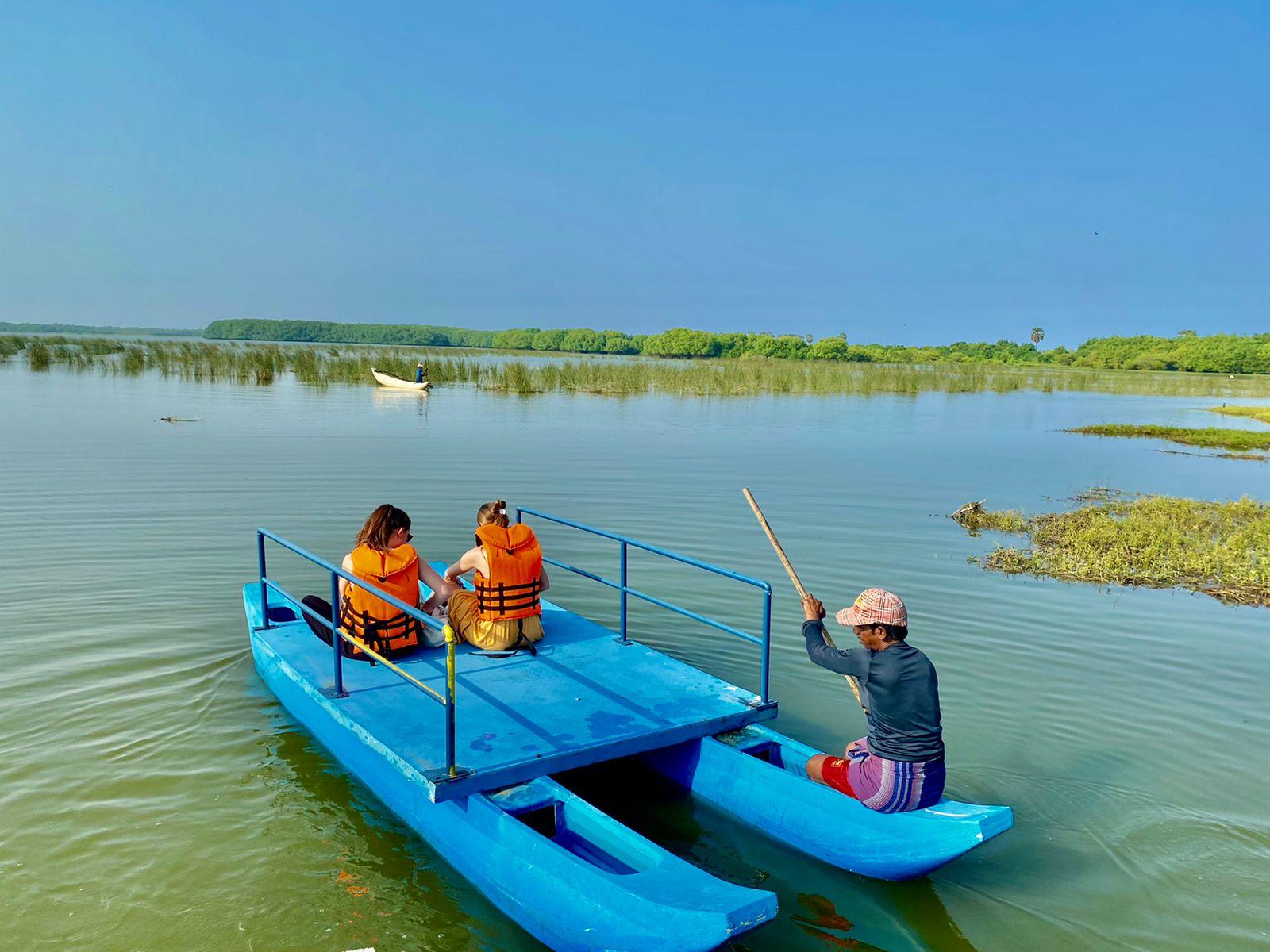
Board the traditional wooden boat
Observe wildlife through the mangrove tunnels
Conclude the excursion at the departure point
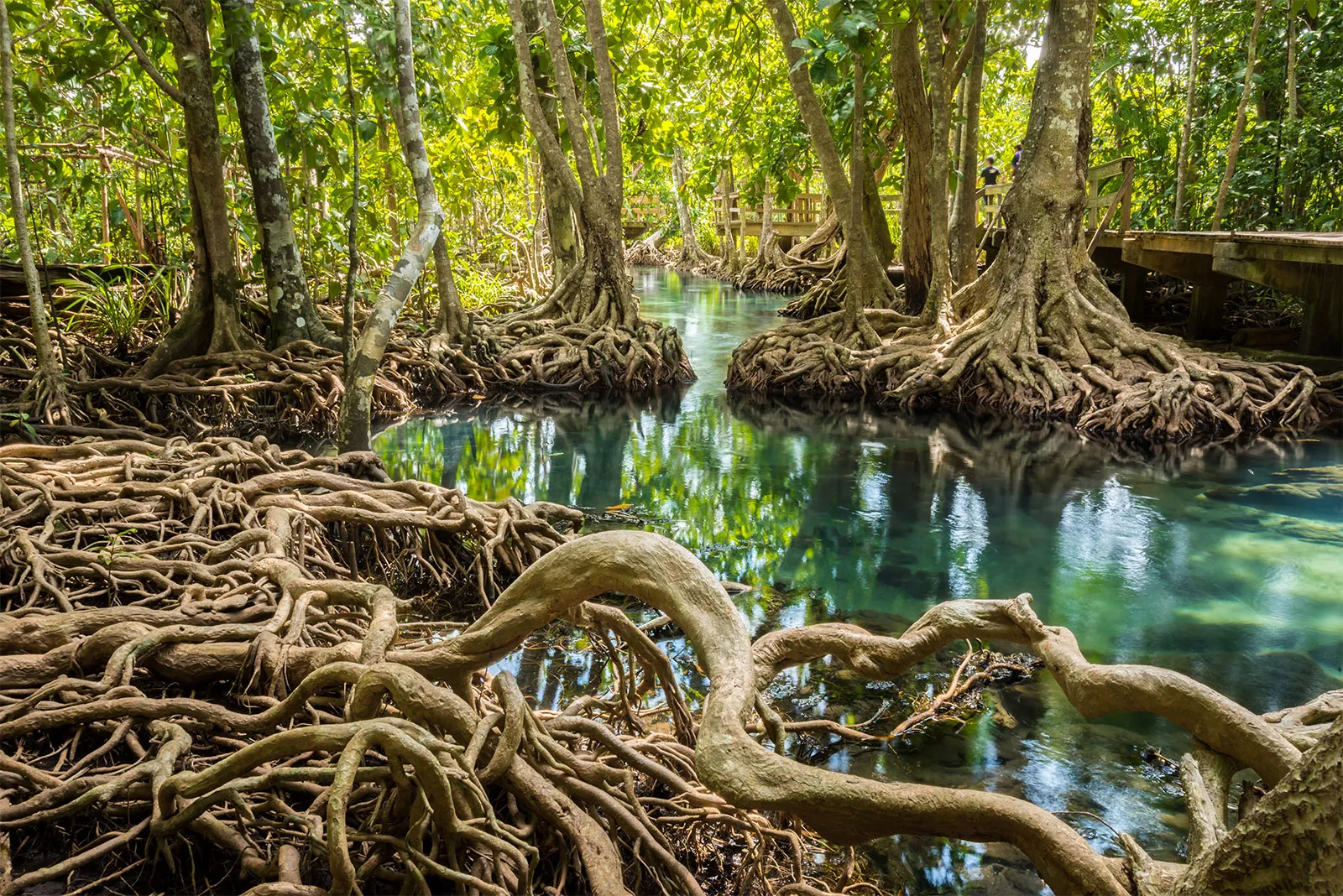
Navigating these narrow channels reveals intricate root systems and aquatic life. These dense thickets act as a nursery for many fish species
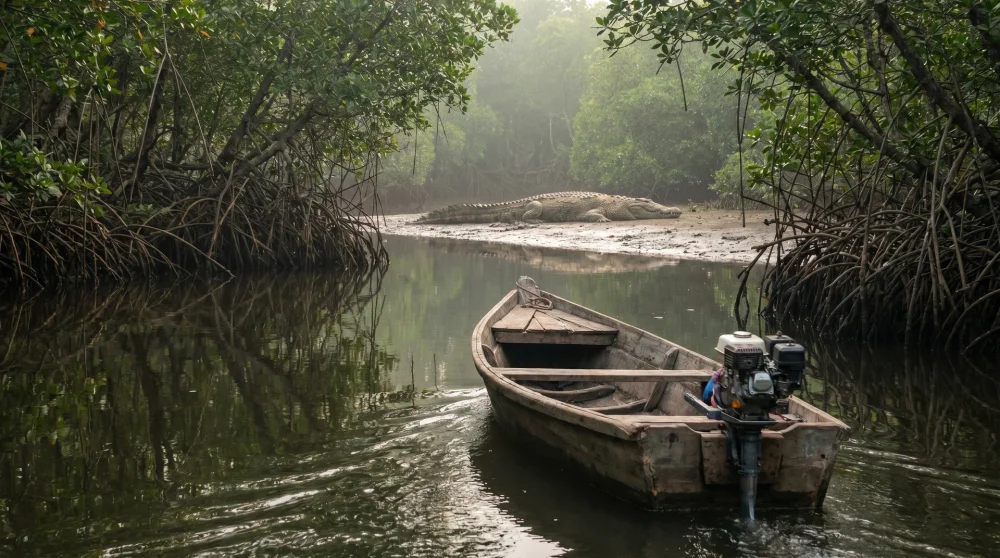
These reptiles are often seen basking on muddy banks along the edges. Guides can point out different species, including the marsh crocodile
The area supports diverse avian populations like kingfishers and herons. Quiet boat movement allows for close observation of nesting behaviors
Observe unique mangrove adaptations, such as stilt roots and salt-filtering leaves. These plants are essential for the health of the Pottuvil Lagoon ecosystem
Various clearings allow for sighting monitor lizards and monkeys in the trees. These animals are accustomed to the quiet transit of the safari boats
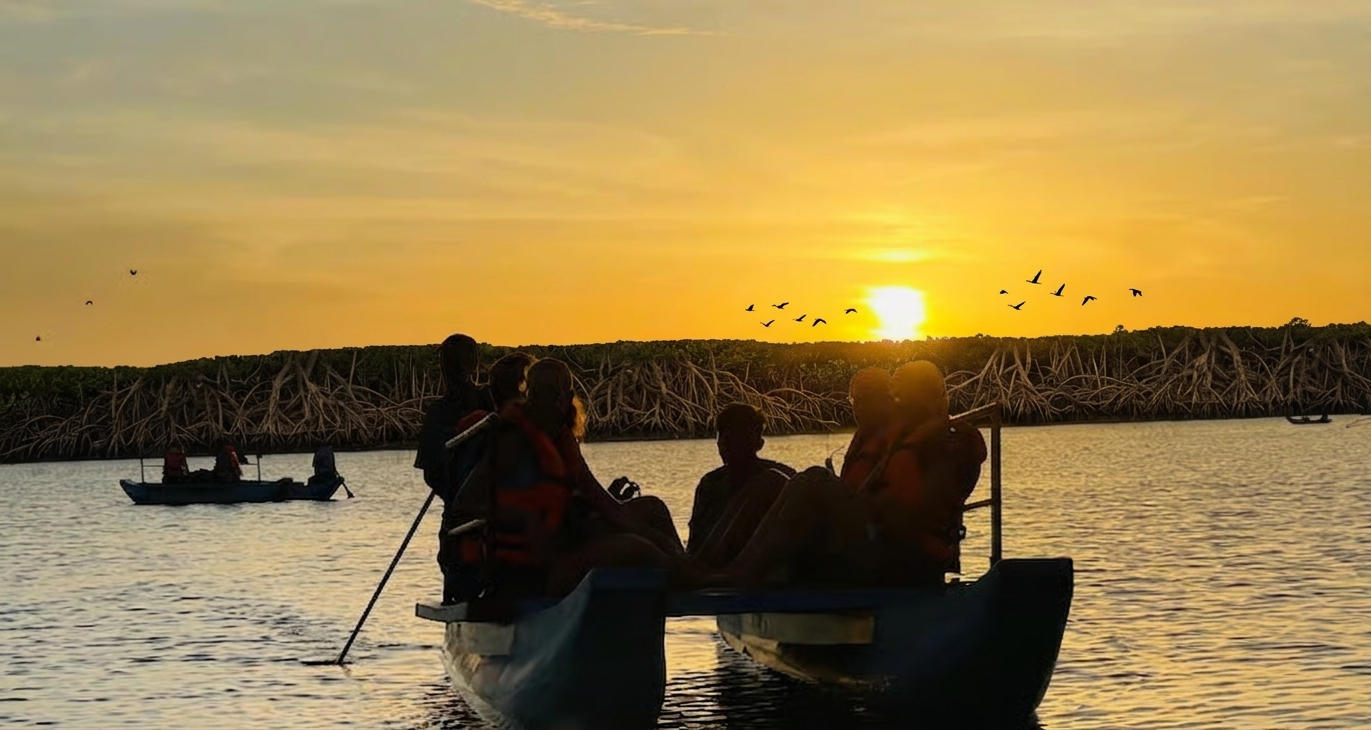
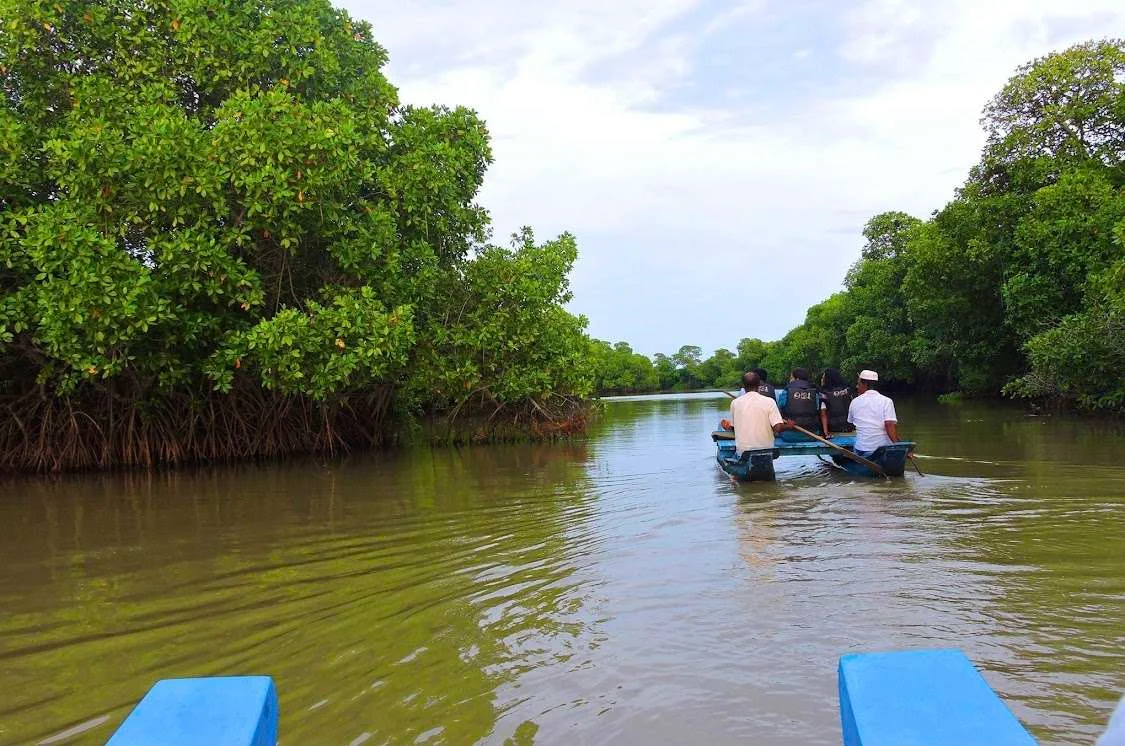
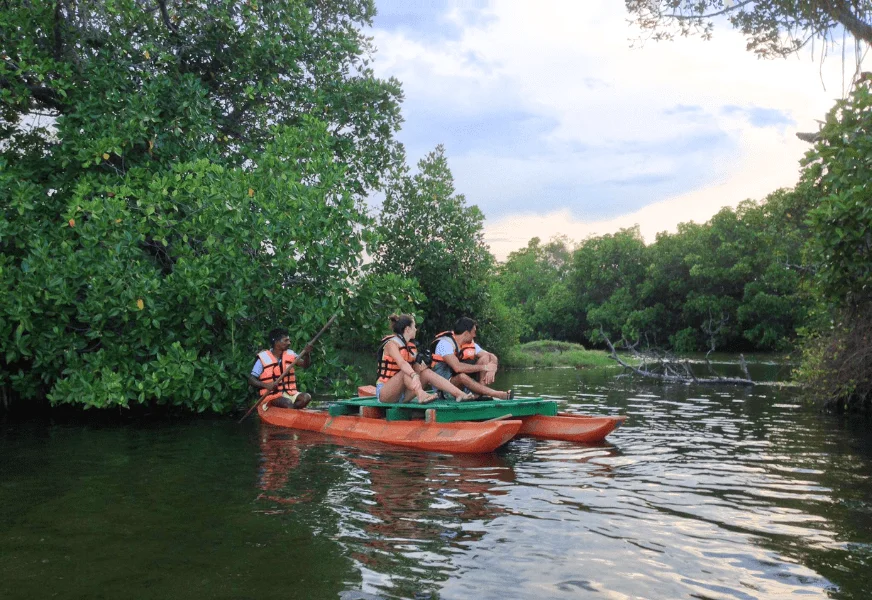
You meet your guide at the village jetty before six, the lagoon surface glassy under pre-dawn grey. The boat noses into the main channel, mangrove roots rising like cathedral arches on both banks. Your guide cuts the outboard motor after five minutes, letting the hull drift on the incoming tide.
A painted stork lifts from a mudflat twenty metres ahead, wings strobing white against the dark canopy. You pass under a low bridge of interlaced branches, the air thick with brine and decomposing leaf matter.
Ten minutes in, the guide points left — a three-metre crocodile motionless on a sand spit, jaws parted to thermoregulate. You raise binoculars. The reptile does not move. The boat drifts closer, stopping three metres away. Your guide explains the territorial range, the nesting sites, the seasonal flood patterns that dictate movement. You photograph the crocodile against the root tangle behind it. A fish eagle calls from a dead snag overhead. The guide poles deeper into a narrow tributary, where the canopy closes and the water darkens to tea-stain brown, and you count eighteen species before the return route begins.
All the details about your upcoming adventure in one place
Pottuvil Lagoon stretches seven kilometres inland from the Indian Ocean, a brackish estuary where tidal currents flood mangrove channels twice daily and saltwater mixes with freshwater runoff from the Heda Oya river.
The lagoon's mangrove forest — dominated by Rhizophora and Avicennia species — forms one of the largest intact coastal wetlands on Sri Lanka's eastern seaboard, a corridor between Kumana National Park to the south and the open sea. Commercial development bypassed the lagoon during the civil conflict decades, leaving 1,200 hectares of tidal flats, mud banks, and prop-rooted thickets undisturbed. When the A4 highway reopened in 2009, the first safari operators arrived with fiberglass boats and dawn departure schedules.
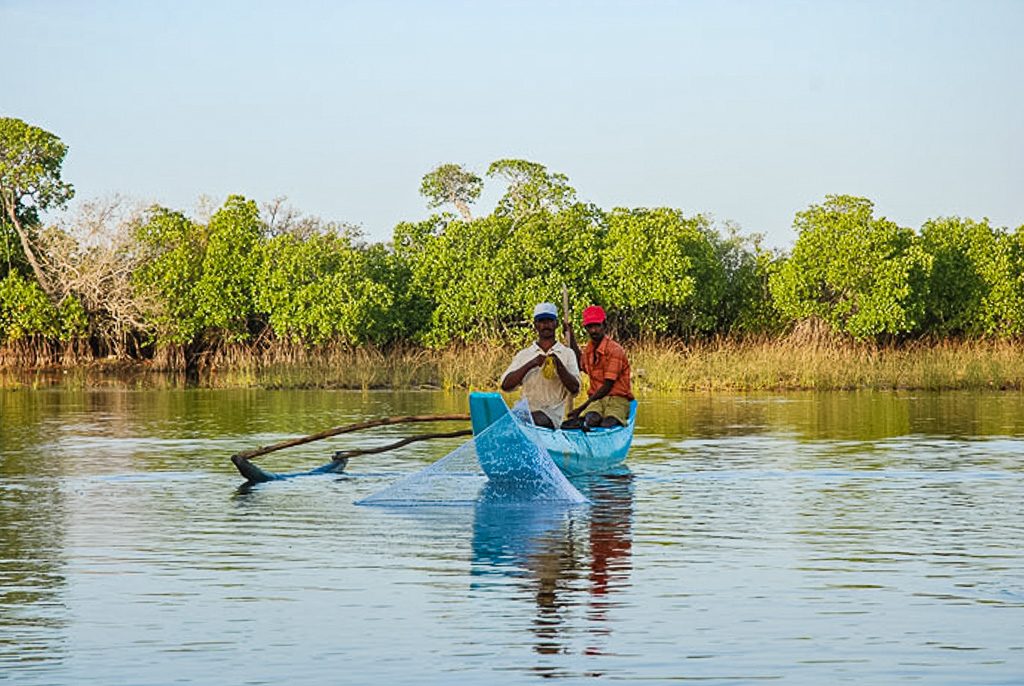
Today the lagoon functions as a nursery for marine species and a permanent refuge for resident crocodiles, water monitors, and over 150 recorded bird species. Painted storks wade in shallows at low tide. Brahminy kites circle above the canopy. Estuarine crocodiles — some exceeding three metres — bask on exposed roots during morning hours, their territorial ranges mapped by guides who navigate the same channels daily. The mangrove substrate traps sediment and filters runoff, stabilizing the coastline against monsoon surge. Fishing families in Pottuvil village have harvested crabs and lagoon prawns here for generations, setting basket traps in tidal creeks at dawn.
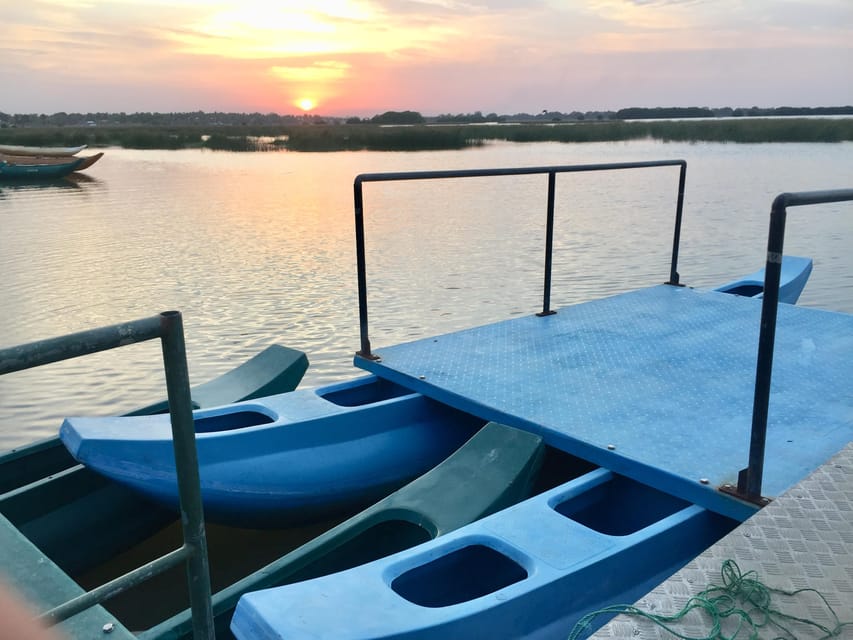
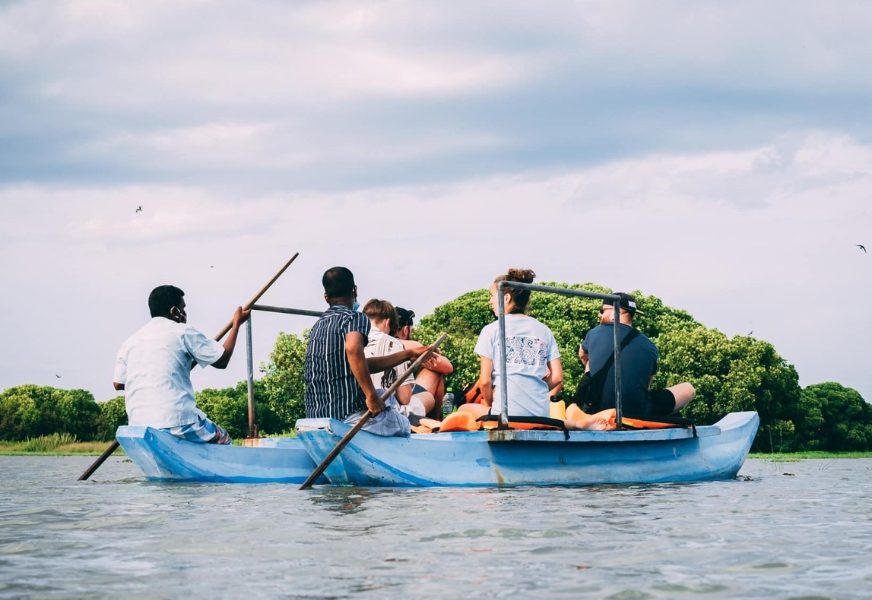
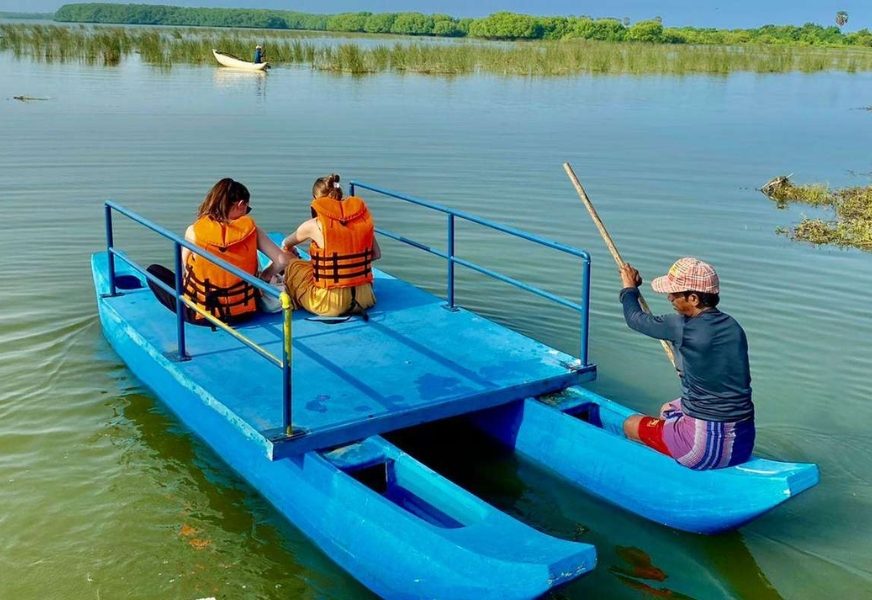
Boat safaris depart from wooden jetties near the village temple, operators licensing fiberglass dinghies and traditional oruwa outriggers for two-hour loops through the main channel and its tributaries. Most routes follow the eastern shoreline, where the canopy thins and sightlines open toward nesting colonies. Guides pole through narrow cuts at high water, the hull clearing submerged roots by centimetres. Binoculars are standard issue. The lagoon connects directly to Kumana's wetland complex during flood season, drawing migratory waders between October and March. Safari timing hinges on tide tables — morning departures catch crocodiles before they retreat to deeper water, and the soft light renders the tangled architecture of the mangroves in high relief.

The mangrove substrate traps sediment and filters runoff, stabilizing the coastline against monsoon surge.
Wear light, breathable clothing and footwear suitable for a boat environment. Modest attire is recommended as a sign of respect when visiting local areas near the Pottuvil Lagoon.
There are no secure lockers at the launch site. Keep personal items to a minimum and ensure all electronic gear is protected in a waterproof bag.
Photography is encouraged during the pottuvil lagoon boat safari tour to capture local flora and fauna. Ensure you have a telephoto lens for distant wildlife and a lens cloth to combat humidity.
The pottuvil lagoon boat safari is suitable for families, though life jackets for children must be requested in advance. Ensure younger children remain seated during the duration of the excursion.
Access to the boats may require stepping over narrow wooden planks or uneven surfaces. Travelers with mobility limitations should confirm specific boat access requirements with their chosen operator.
No food or drink facilities are available at the site. Visitors should carry their own water and may bring snacks, provided they remove all waste to preserve the ecosystem.
Opening Hours
00:00–23:59
Address
Pottuvil Lagoon, Pottuvil, Sri Lanka
Accessibility
Varies by independent operator boat type
Best arrival window
06:00–17:30
Storage
Not available at the lagoon entry
Location
Eastern Province coastal region
Car · Varies · Low
Follow the main A4 coastal highway toward Pottuvil town. Parking is available at various operator access points near the lagoon edge
Taxi · 0:15 · Low
Hire a local tuk-tuk from Arugam Bay for a short trip to the lagoon. Negotiate the fare before departure
Cancellation policies depend on the individual tour operator chosen for your pottuvil lagoon boat safari. Most providers require at least 24 hours notice for a full refund of any prepaid booking fees, excluding the 0 LKR entrance fee.
Recommended time
2 hours
Visitors typically spend two hours exploring the dense mangrove forests and tranquil waterways during a pottuvil lagoon boat safari. Optimal lighting and wildlife spotting occur during the early morning and late afternoon, so plan your arrival accordingly. While pottuvil lagoon boat safari tours do not have formal queue systems, booking ahead ensures you secure a vessel. You may want to allocate extra time if you wish to observe the ecosystem at a slower pace or capture photos of local birdlife, as pottuvil lagoon boat safari tickets are managed by independent operators at the site.
Crowd levels through the day
Weather · crowds · average price — dots go green to amber to red as each metric rises.
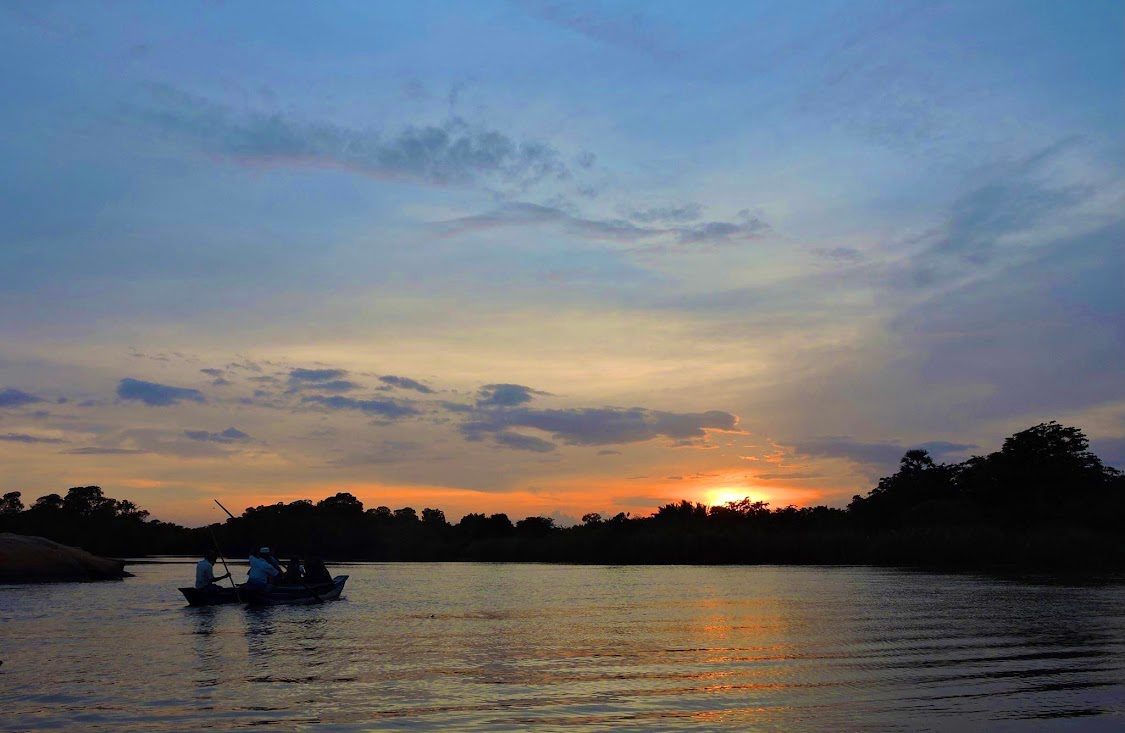
This period aligns with the dry season and optimal wildlife visibility. Mornings are cooler and ideal for spotting birds and crocodiles during a pottuvil lagoon boat safari.
The region experiences the northeast monsoon with higher rainfall. Water levels rise, changing the navigable routes for pottuvil lagoon boat safari tours.
Maintain a quiet demeanor to increase chances of seeing monitor lizards and crocodiles. Your boat guide can help identify native bird species in the mangrove canopy.
Secure your pottuvil lagoon boat safari tickets with a licensed operator to ensure a reliable guide. This helps regulate the flow of visitors and supports sustainable practices.
The sun reflects intensely off the water surface. Wear a wide-brimmed hat and apply high-SPF sunscreen before starting your boat journey.
Employing local boatmen provides direct economic support to the community. They possess deep knowledge of the hidden waterways and tidal patterns.
Wear sandals or flip-flops that are easy to remove. You may need to step into shallow water when boarding or disembarking.
Pottuvil Lagoon emerged as a recognized safari destination in the early 2000s, when local fishermen began offering informal boat tours to visiting surfers and backpackers exploring Sri Lanka's east coast. The lagoon itself, fed by the Heda Oya river and opening to the Indian Ocean near Arugam Bay, had long served coastal communities for fishing and transport. Mangrove restoration efforts initiated by the Coast Conservation Department in 1998 following cyclone damage inadvertently created richer wildlife corridors. By 2005, naturalist guides documented over 90 bird species within the estuarine system, including painted storks and Asian openbills. The 2004 Indian Ocean tsunami devastated Pottuvil's coastline, destroying fishing infrastructure and displacing communities. Recovery funding channeled through NGOs in 2006–2008 included livelihood diversification grants, which several fishing cooperatives used to purchase fiberglass boats and train members as ecotourism operators. The first licensed pottuvil lagoon boat safari tours launched in 2009 under the Pottuvil Lagoon Community-Based Tourism initiative. Peak visitation occurred between 2011 and 2019, coinciding with Arugam Bay's rise as an international surf hub. Operators expanded routes to include early-morning crocodile sightings and sunset mangrove transects. The civil conflict's end in 2009 opened the Eastern Province to foreign tourism, though boat safari growth remained gradual until road improvements in 2012 reduced Colombo transit time to seven hours. The COVID-19 pandemic in 2020–2021 halted all boat operations for fourteen months. Recovery began in late 2021, with operators adopting smaller group sizes and electric outboard motors to reduce noise pollution. As of 2026, approximately twelve independent operators offer pottuvil lagoon boat safari experiences, maintaining informal scheduling through guesthouse networks rather than centralized booking platforms. The lagoon remains free-access public water, with no entrance fees collected.
Coast Conservation Department begins mangrove replanting in Pottuvil Lagoon after cyclone erosion
Tsunami destroys fishing fleet; naturalists catalog 90+ bird species in recovering wetlands
First licensed community-based boat safari tours launch with NGO livelihood grants
Eastern Province road upgrades reduce Colombo travel time, increasing tourist access
COVID-19 pandemic suspends all boat operations for fourteen months
Operators resume tours with electric motors and smaller group protocols
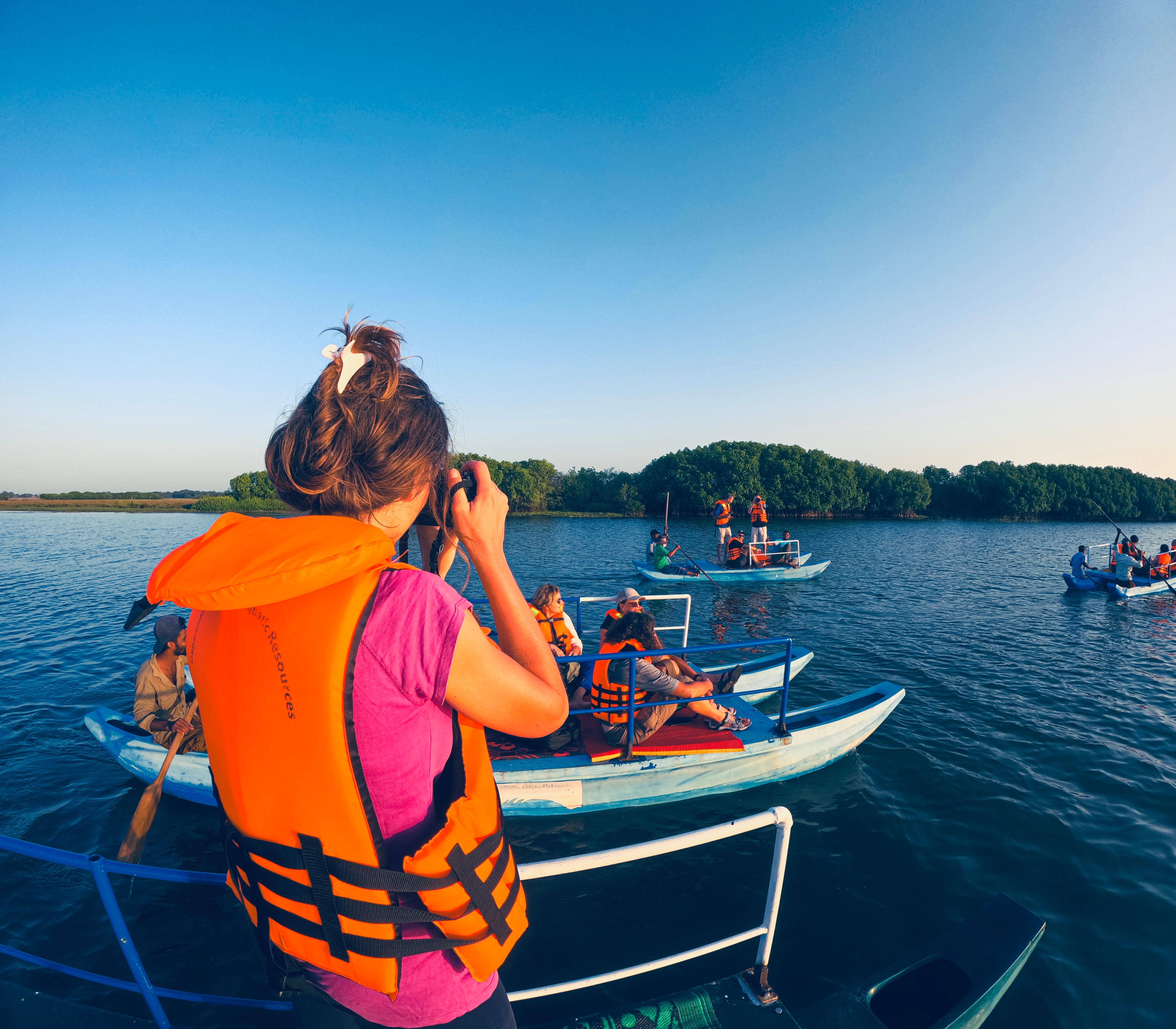
Position your camera at the bow as the boat enters the dense, overhanging vegetation to capture the play of light on the water. This spot offers a unique perspective of the pottuvil lagoon boat safari interior passages.
Shoot from the center of the lagoon to capture wide shots of the surrounding forest and distant coastline. This location is ideal for photographing wildlife such as water buffalo or diverse avian species that frequent the pottuvil lagoon boat safari tours.
Stand near the waterline to photograph the intricate root systems of the mangroves and nearby mudskippers. These lower-angle shots provide a detailed view often missed on pottuvil lagoon boat safari tickets.
Use this elevated vantage point near the launch area to frame the broader horizon before boarding for your pottuvil lagoon boat safari tour. The clear line of sight allows for capturing panoramic images of the wetland ecosystem.
Exploring the mangroves via a pottuvil lagoon boat safari offers children a tranquil encounter with local wildlife in their natural habitat. This gentle water-based experience allows families to observe diverse bird species and monitor lizards in a calm, aquatic environment.
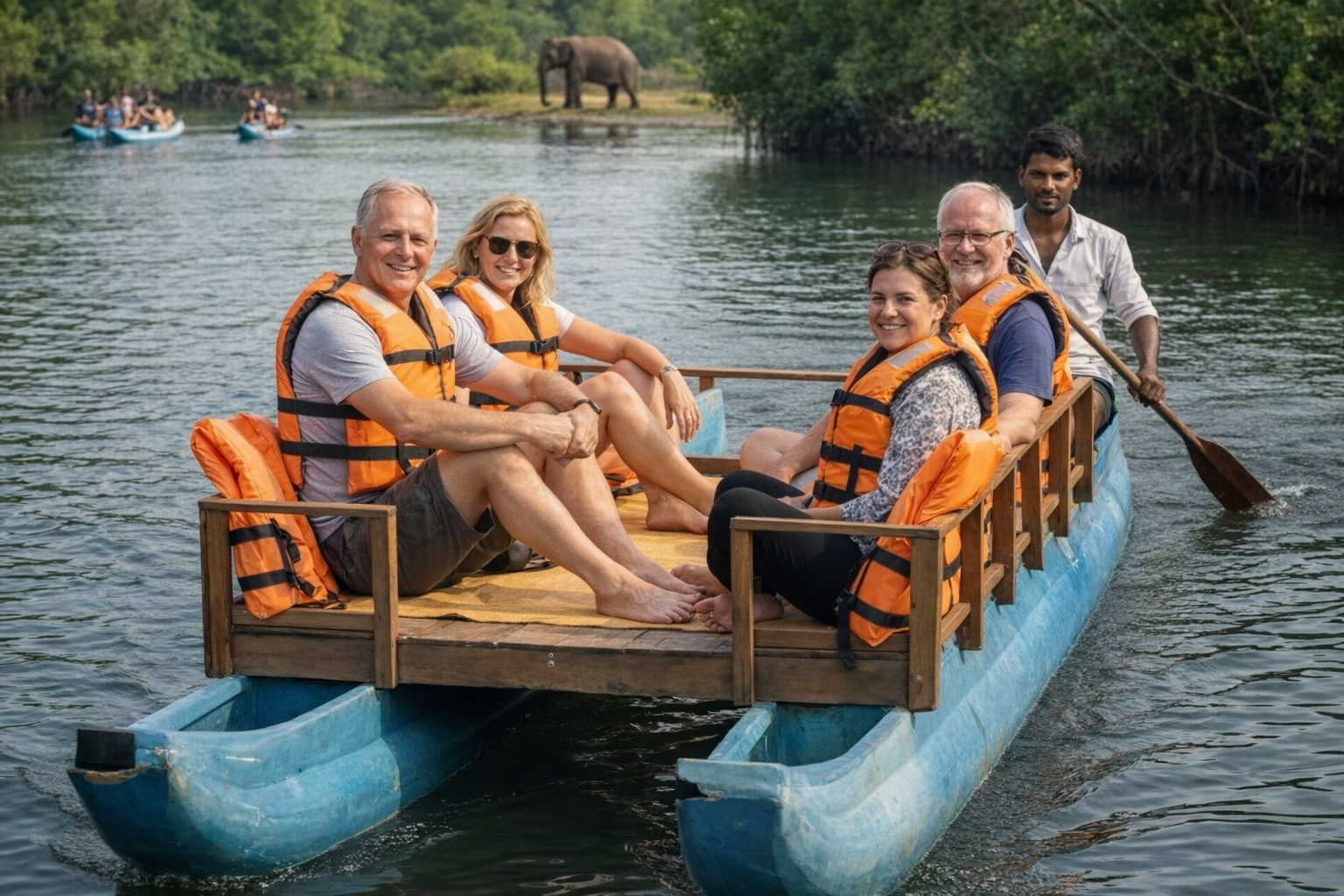
The wooden outrigger canoes used for pottuvil lagoon boat safari tours are generally steady, but children should remain seated throughout the trip to maintain balance. Life jackets are provided by operators, so ensure you request properly fitted sizes for all young passengers before departing.
Because this is a quiet nature excursion, younger children may need gentle preparation to stay calm and minimize noise during the Pottuvil Lagoon boat safari tour. Patience is key when scanning the mangrove thickets for crocodiles and monkeys, as the animals move at their own pace.
There are no formal baby-change facilities or specialized infrastructure at the lagoon banks, so parents should arrive prepared with necessary supplies. Restrooms are limited, making it wise to utilize facilities in Pottuvil town before heading to the departure point.
The embarkation points involve walking across sandy or uneven shorelines, meaning strollers are not suitable for reaching the boats. When considering pottuvil lagoon boat safari tickets, ensure all family members are comfortable with the physical transition from land to the small craft.
While there are no dining facilities directly at the water's edge, visitors participating in a pottuvil lagoon boat safari can find diverse culinary options in the nearby Pottuvil town and Arugam Bay. These areas provide refreshing stops to enjoy local Sri Lankan cuisine after completing your mangrove exploration.
This popular spot offers a relaxed environment serving fusion dishes and fresh juices. It is a preferred choice for those wrapping up their pottuvil lagoon boat safari tours with a comfortable meal.
Located in Arugam Bay, this venue features a broad menu ranging from traditional curries to international staples. Many travelers book pottuvil lagoon boat safari tickets and head here afterward for the spacious seating and ocean breeze.
A local favorite known for authentic kottu roti and fresh seafood dishes prepared to order. It provides an accessible option for guests finishing a pottuvil lagoon boat safari tour who prefer a quick, flavorful bite in the heart of Pottuvil.
Everything you need to know for your journey
The lagoon is accessible 00:00–23:59 daily, but tours are best taken within the recommended 06:00–17:30 arrival window. Check with your chosen operator for their specific operational hours.
There is a 0 LKR entrance fee for the Pottuvil Lagoon itself. Individual tour costs vary by the provider you choose for your safari.
The best arrival window is 06:00–17:30 to maximize wildlife sightings and enjoy favorable lighting. Morning tours generally offer the most active wildlife experience.
There are no official age restrictions for these boat trips, though parents should exercise caution. Always confirm safety gear availability for children with your operator.
Photography is highly recommended during a pottuvil lagoon boat safari to capture the diverse ecosystem. Ensure you use a waterproof case to protect your equipment from spray.
You can book pottuvil lagoon boat safari tickets directly through local independent operators at the lagoon site. Always confirm the duration and route with them beforehand.
Accessibility is limited as boats are traditional and often require stepping into water or over uneven banks. Please verify accessibility with your selected provider before arriving.
Bring water, sunscreen, a hat, and a camera on your pottuvil lagoon boat safari. Remember to carry out all trash to keep the lagoon clean.
There are no dining facilities at the lagoon site. It is recommended to eat in Pottuvil or Arugam Bay before or after your pottuvil lagoon boat safari.
An ancient Buddhist temple located near the beach. It features historical ruins and coastal views.
A significant pilgrimage site situated within the Kumana National Park vicinity. It attracts many devotees during the Pada Yatra season.
A world-renowned surfing destination known for its long right-hand point breaks. It offers a lively atmosphere for travelers.
Range of beachfront villas and eco-lodges near the lagoon access point
Join thousands of happy travelers who have discovered this incredible experience
Book Your Experience Now